
Frequently Asked Questions
Find quick answers about AQI, PM2.5, and how to use AirSL data.
What is Air Quality Index (AQI)?
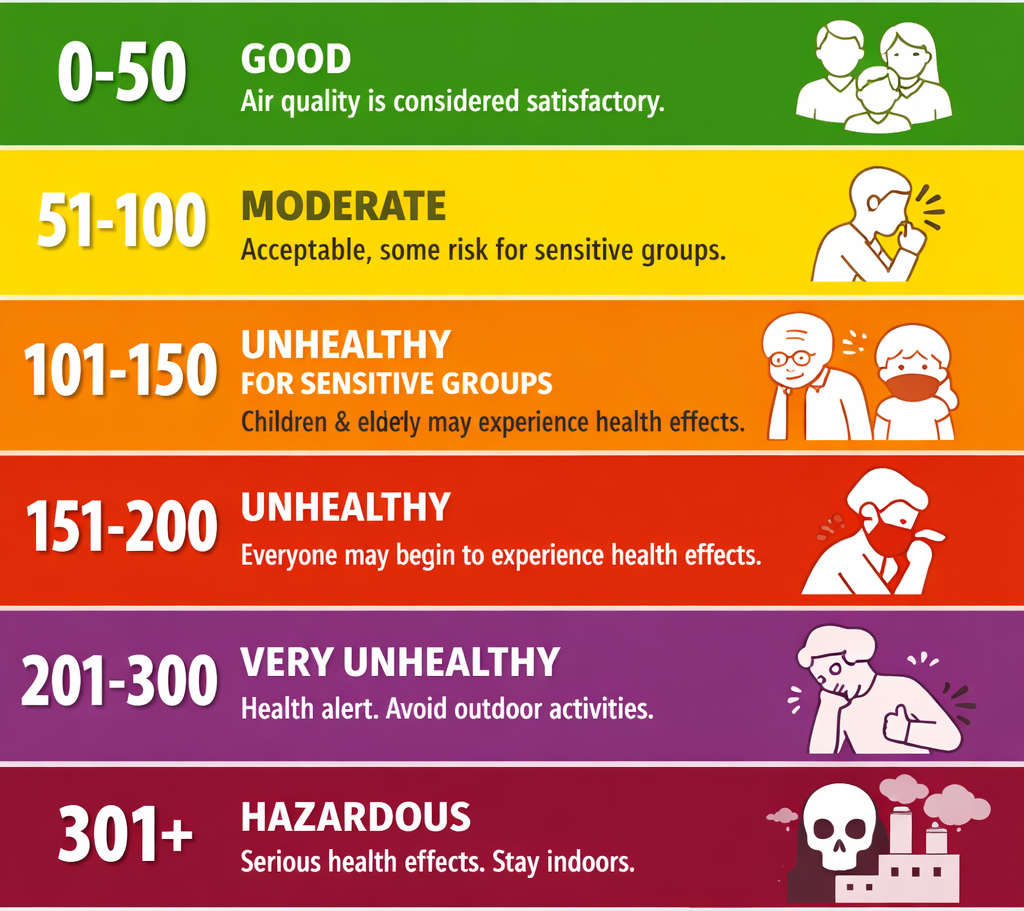
AQI is a health index. It is a standard implemented by the World Health Organization (WHO) that uses a colour-scale to classify the concentration of pollutants breathed into the human body for a specific pollutant across a fixed time period. In this case, the AQI measures the PM₂.₅ levels in the atmosphere and communicates whether the air quality is healthy or unhealthy. You can read more about AQI in our following insights
How often is air quality data updated?
Air quality data is typically updated every 60 minutes, depending on the data source and sensor availability.
This ensures users receive near real-time air quality information
What is the difference between Sri Lanka AQI (SL AQI) and United States AQI (US AQI)?
The key difference between them lies in how they define and interpret pollution levels. US AQI is based on internationally recognized standards developed by the United States Environmental Protection Agency (EPA), using well-established breakpoint ranges and health categories, which makes it widely used around the world and suitable for comparing air quality across different countries and regions.
In contrast, SL AQI is developed and maintained by the Central Environmental Authority (CEA) and is tailored specifically for Sri Lanka, using locally defined thresholds that reflect regional environmental conditions, population sensitivity, and national policy decisions. Because of these differences in breakpoints and category thresholds, the same pollutant concentration can result in different AQI values and health classifications in the two systems—for example, a PM2.5 reading might be considered “Moderate” under one system but “Unhealthy for Sensitive Groups” under another.
In terms of usage, US AQI is generally preferred when you need a consistent, globally comparable standard or when your audience is familiar with international air quality metrics. SL AQI is more appropriate when focusing on local reporting, compliance, or decision-making within Sri Lanka, as it aligns with national guidelines and expectations. In most applications, it is beneficial to provide both indices: US AQI for broader understanding and comparison, and SL AQI for local context and relevance.
What is PM₂.₅ air pollution?
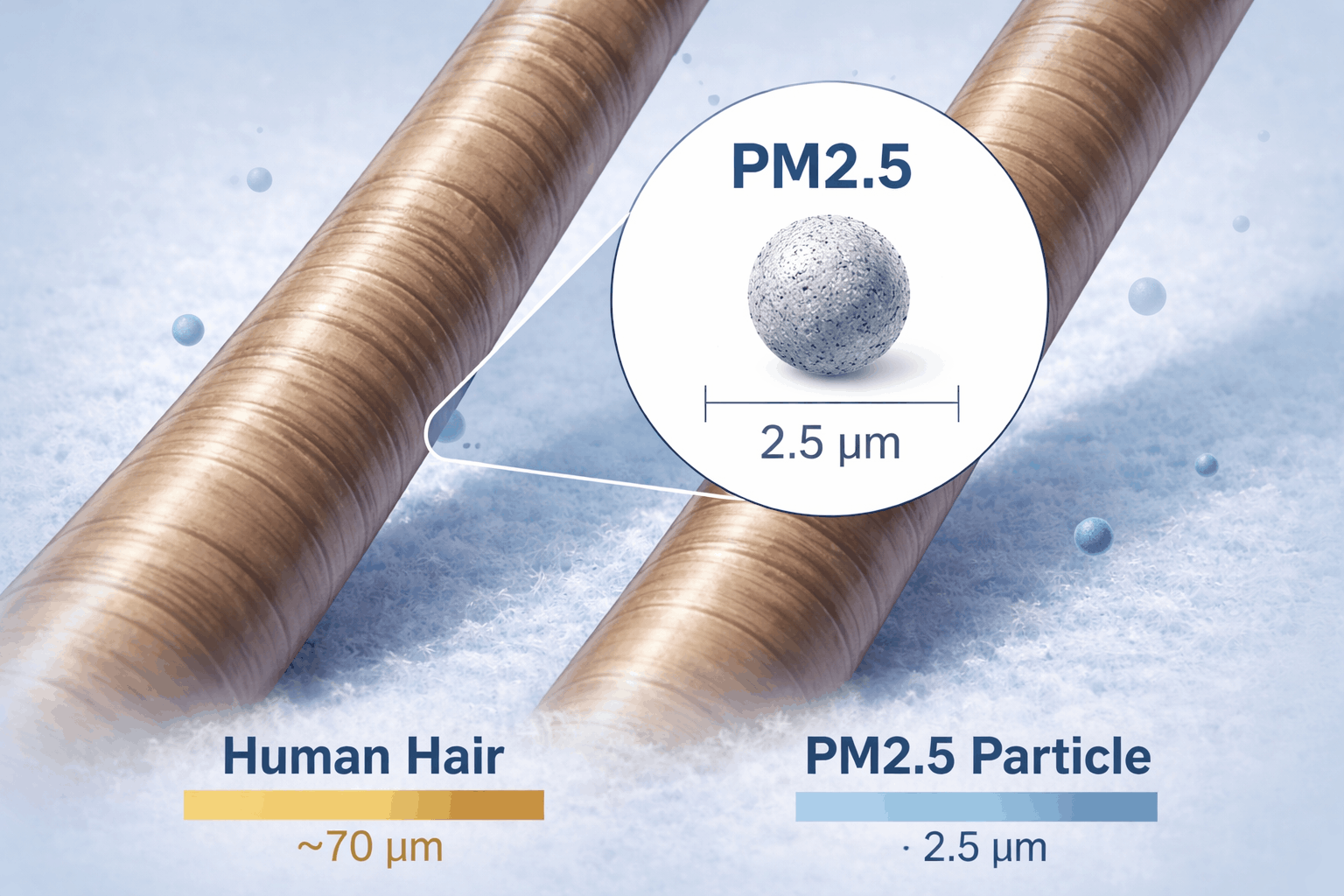
PM₂.₅ air pollution refers to extremely tiny airborne particles (less than 2.5 micrometers wide) from sources like vehicle exhaust, industrial emissions, and smoke, which are dangerous because their small size allows them to travel deep into lungs and enter the bloodstream, causing serious respiratory and cardiovascular issues like heart disease, lung cancer, and asthma, often described as a silent killer due to its invisible threat and global impact.
How do you calculate the Air Quality Index (AQI) from PM₂.₅ concentration?
AQI values are corresponding values of the PM₂.₅ concentration ranging from 0 to 500. These PM₂.₅ concentration ranges are attributed to specific color codes in the index for easy understanding. Concentration data is translated into color coded AQI with specific air quality categories to define the level of air pollution. You can find more in one of our following insights. AQ concentration and the corresponding AQI range is listed comprehensively.
What are the dots on the map?
The Map showcases the geographical location of air quality sensors that provide real- time hourly measurement of AQI based on PM₂.₅ concentrations.
Why can air pollution impact the health of children and infants?
Children are sensitive groups due to their high susceptibility. The breathing rate of children is twice as that of adults, hence they take more air into the respiratory track. Air pollution weakens their immune system and increases the vulnerability to a range of diseases. Such children are more susceptible to relatively diminished neurodevelopment and cognitive ability, higher risk of developing asthma, Acute Lower Respiratory Infection (ALRI), childhood cancer and chronic diseases, such as cardiovascular disease and otitis media, later in life.
Why are pregnant women more susceptible to air pollution?
Fetus is exposed to particulate matter through the mother. Mother and fetus are separated by the placenta during pregnancy. The particulate matter in the mother's blood stream translocates through the placenta and enters the fetus blood stream where it affects the development of fetus's immune system. Further, exposure to high levels of air pollution also increases the risk of stillbirth and infant mortality, increased risk of low birth weight, underdeveloped lungs and increased probability of a child showing autism.